

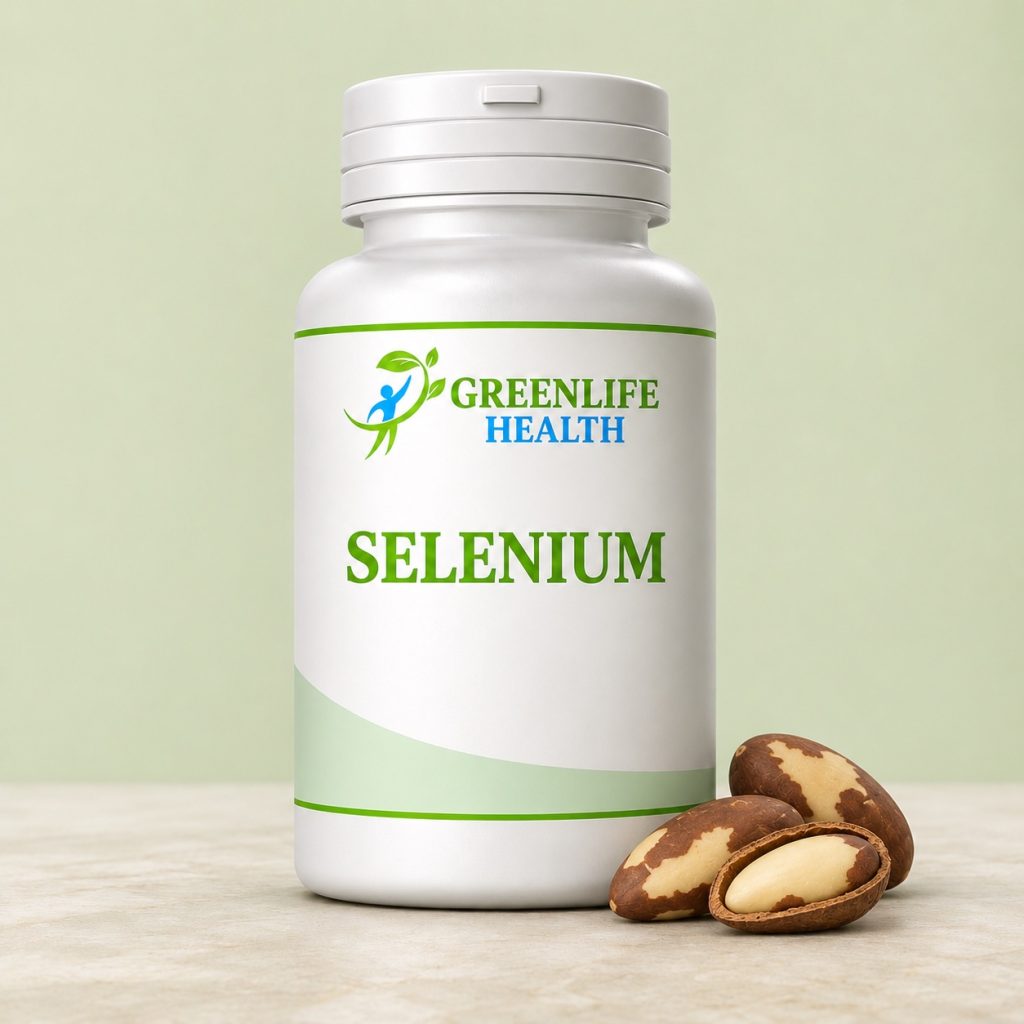
Small units deserve close attention on a supplement label. Selenium is normally listed in micrograms, and the difference between a nutrient’s role in the body and the amount in a particular tablet is important when comparing products.
What is selenium?
Selenium is a nutrient involved in thyroid function, DNA production and protection of cells. Food sources include fish, meat, eggs and some plant foods. These normal roles do not mean that taking extra selenium prevents disease or improves every person’s health. The NIH consumer fact sheet explains its role and the research.
Read the supplied label carefully
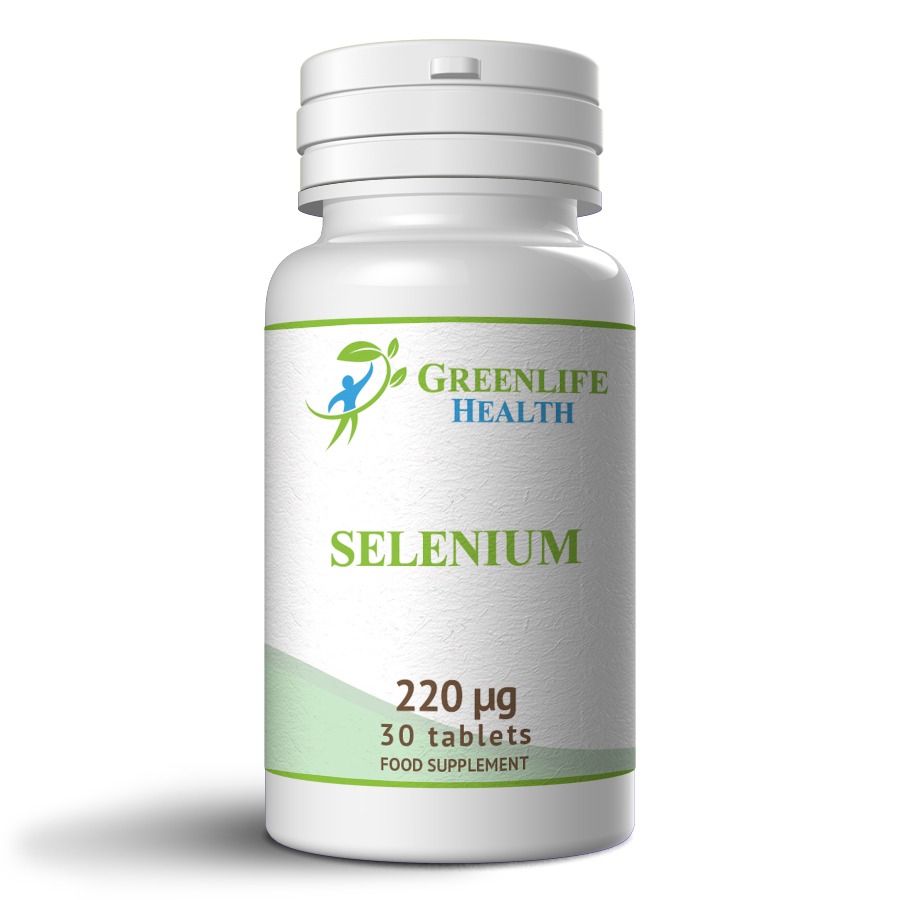
The Greenlife label supplied for this catalogue lists selenium as selenomethionine, at 220 μg per tablet. It displays 400% NRV. Those are label details, not a personalised intake target. A percentage is useful context, but a larger percentage should not be treated as a reason to take more.
The symbol μg and the abbreviation mcg both mean micrograms. One milligram equals 1,000 micrograms, so 220 μg equals 0.22 mg. Retain the unit when copying the amount into a medicine or supplement record; writing only “220” loses an essential part of the information.
Count all the sources you already use
Check multivitamins and other combination supplements for selenium before adding a separate tablet. Bring all the labels to a pharmacist so they can review the combined intake and any interactions. The aim is to understand the complete routine, rather than making a decision about each bottle in isolation.
Too much selenium can be harmful. Reported effects include nausea, hair loss and brittle nails. Brazil nuts can also contribute substantial amounts, so food and supplements both matter when assessing intake. Selenium supplements have not been shown to reduce heart-disease risk in people already getting enough selenium. Read the NIH safety and evidence sections.
Use the current pack for a final check
Confirm the ingredient form, amount per tablet, directions and other ingredients on the pack you receive. If a photo, website entry and current label differ, ask for clarification before use. Keep the bottle’s batch details available for any product enquiry.
Questions about a possible deficiency or thyroid condition belong with a clinician. A supplement’s name or NRV percentage cannot diagnose a condition or determine the appropriate treatment.
General information, not individual medical advice. Product details reflect supplied catalogue material; check the current pack and ask a pharmacist about suitability.
Sources and further reading
Sources checked 3 November 2026. Product formulations can change; check the pack supplied with your order. These sources do not endorse this shop or its products.