

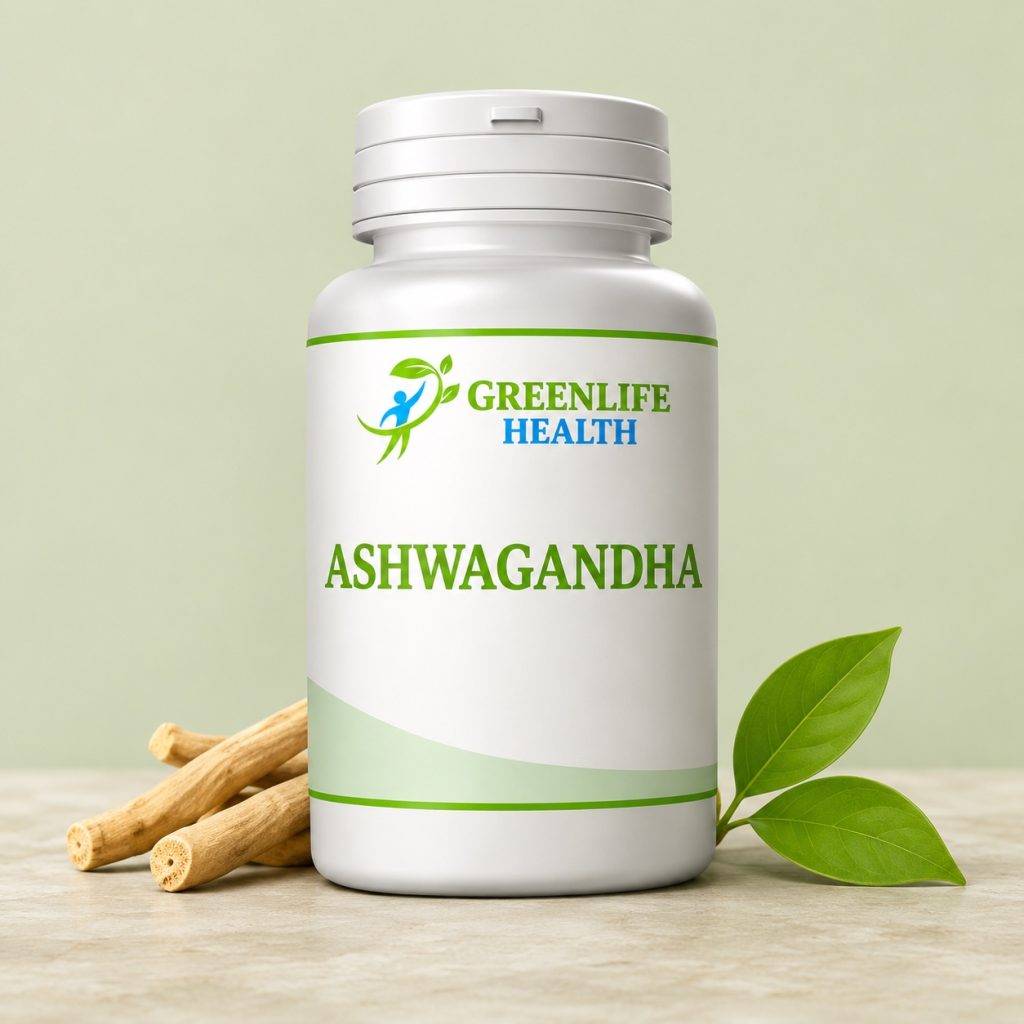
Ashwagandha appears on many supplement shelves, but two bottles with the same ingredient name are not necessarily the same preparation. A useful starting point is to understand the product label, the research behind the ingredient and the questions to take to a pharmacist.
What is ashwagandha?
Ashwagandha, also called Withania somnifera, is a plant used in traditional Ayurvedic medicine. Supplements can contain root, leaf or extracts made from different parts of the plant. These distinctions matter when comparing a bottle with a study. NCCIH explains the ingredient and its preparations.
Read beyond the headline number
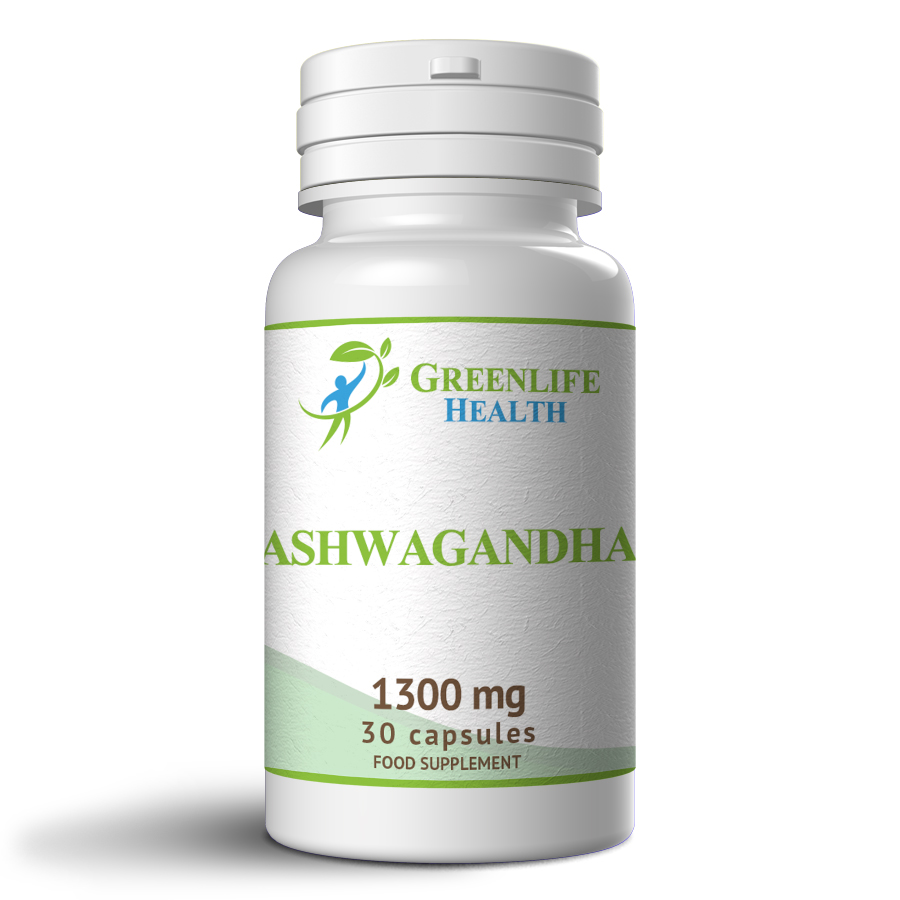
The Greenlife product image supplied for this catalogue displays 1300 mg and 30 capsules. Those front-of-pack details do not, on their own, establish the plant part, extraction ratio, standardisation or complete directions. Ask for the current full label before comparing it with another formulation.
- Check the exact ingredient and plant part.
- Find whether an amount is per capsule or per daily serving.
- Read the other ingredients and suitability information.
- Keep the pack so its directions and batch details remain available.
What does the research tell us?
NCCIH reports that some preparations may help with stress or insomnia, while evidence for anxiety is unclear. Studies have often been small and have used different preparations. These findings do not demonstrate that every ashwagandha product produces the same result. Long-term safety is also uncertain. Read the evidence summary.
Have a suitability conversation first
Ashwagandha should be avoided during pregnancy and breastfeeding. NCCIH also advises against use for people approaching surgery or with thyroid or autoimmune disorders. It can interact with medicines; digestive upset and drowsiness can occur, and liver injury has been reported. See the safety information.
When asking for advice, bring the actual label and a list of medicines and supplements. This is more useful than asking whether the ingredient is generally “good” or “natural”. A pharmacist can assess the particular formulation and your circumstances together. Do not use a supplement to replace care for persistent sleep or mental-health difficulties.
General information, not individual medical advice. Product details reflect supplied catalogue material; check the current pack and ask a pharmacist about suitability.
Sources and further reading
Sources checked 3 November 2026. Product formulations can change; check the pack supplied with your order. These sources do not endorse this shop or its products.