

“Omega-3” describes a family of fatty acids, not one interchangeable ingredient. For a flaxseed oil supplement, the useful questions are which fatty acids are listed, how much each softgel provides and what the capsule itself contains.
ALA is different from EPA and DHA
Alpha-linolenic acid, or ALA, is an essential omega-3 found in plant oils including flaxseed oil. EPA and DHA are other omega-3s commonly associated with fish and seafood. The body converts only small amounts of ALA into EPA and DHA, so equal weights of flaxseed oil and fish oil are not directly equivalent. The NIH omega-3 fact sheet explains the distinction.
Read the amount per softgel
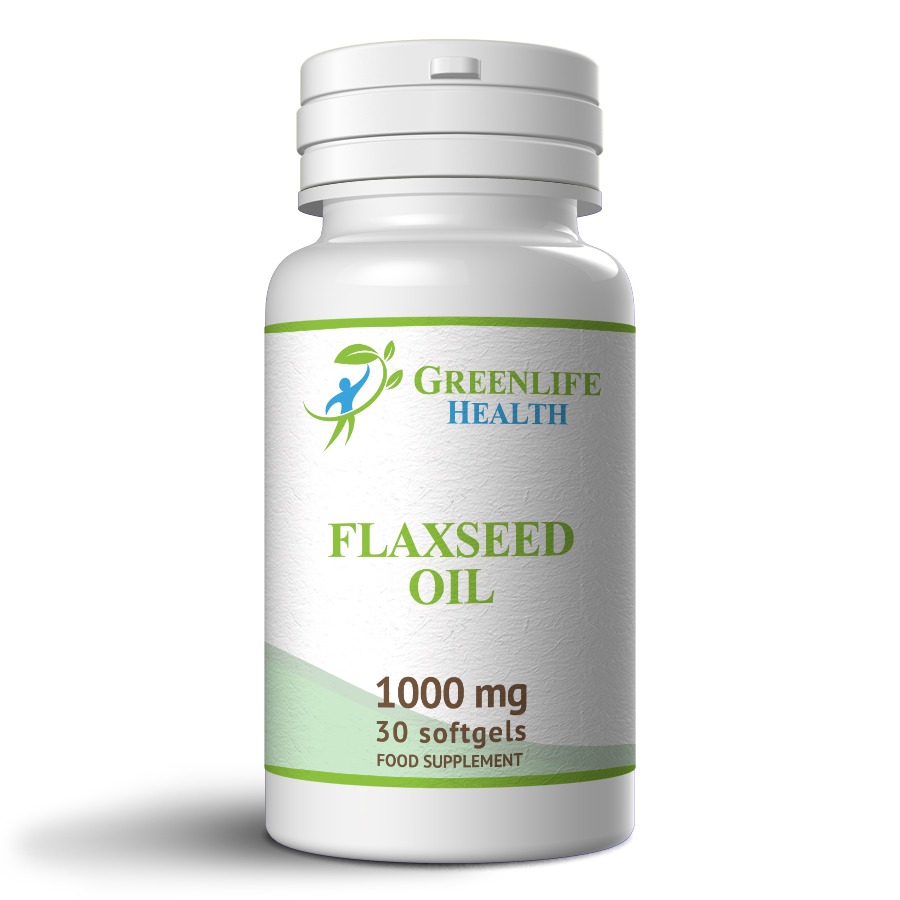
The supplied Greenlife label lists 1000 mg of flaxseed oil per softgel, typically providing 563 mg of alpha-linolenic acid. It also lists oleic, linoleic, palmitic and stearic acids. The total oil amount and the ALA amount describe different things; 1000 mg of oil should not be relabelled as 1000 mg of ALA.
For comparisons, record the named fatty acid, its amount and the serving size together. A bottle count tells you how many softgels are included, but does not establish a suitable daily intake for a particular person.
A plant oil does not make every capsule vegan
The supplied label lists a gelatin capsule, with gelatin, glycerine, caramel colour and purified water. This matters if you avoid animal-derived ingredients. Read both the oil description and the capsule ingredients; a plant-derived main ingredient does not, by itself, establish vegan suitability for the finished product.
Consider suitability alongside the label
Flaxseed oil supplements can cause digestive discomfort, and interactions with medicines such as anticoagulants or antiplatelet medicines are a consideration. Safety information for use during pregnancy or breastfeeding is limited. NCCIH also notes that flaxseed oil supplements do not appear to help with weight loss. Read the NCCIH overview.
If you need advice, bring the label and explain the reason you are considering an omega-3 product. Keep any professional recommendation specific: whether it concerns ALA, EPA or DHA makes a difference to the comparison. Use the current pack for directions and storage information rather than borrowing instructions from a different oil supplement.
General information, not individual medical advice. Product details reflect supplied catalogue material; check the current pack and ask a pharmacist about suitability.
Sources and further reading
Sources checked 3 November 2026. Product formulations can change; check the pack supplied with your order. These sources do not endorse this shop or its products.